
2FA Email: How To Use Auto-Login Links Feature
Auto-Login Links is a convenient feature that simplifies the login process for the all users who have Two-Factor Authentication (2FA) by email enabled for their user login.
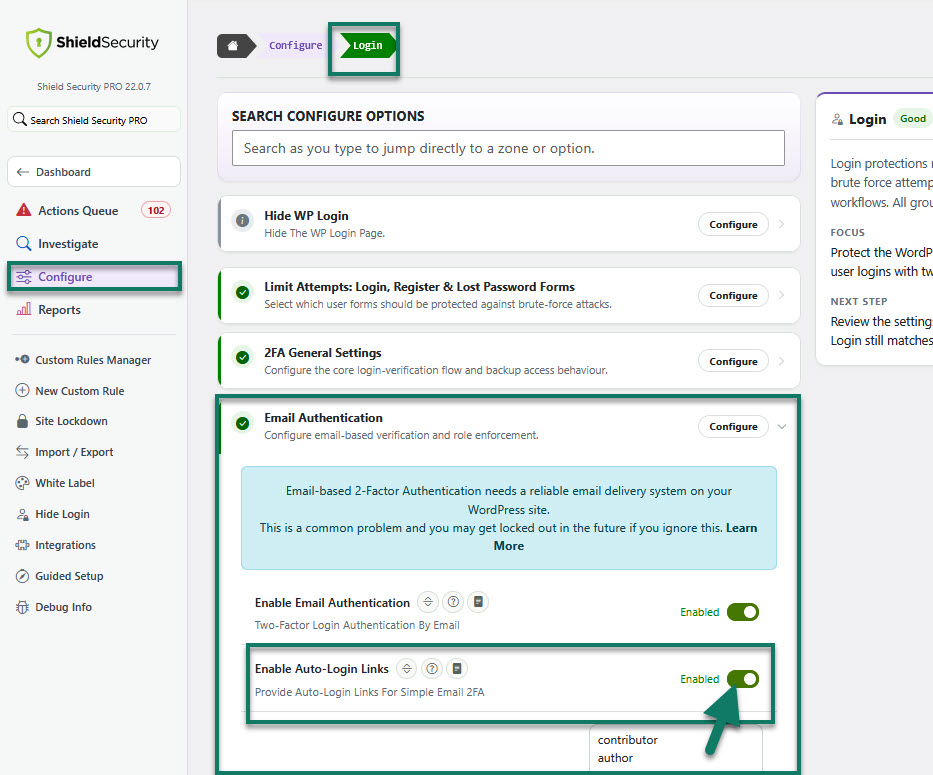
The option is located under the Shield main sidebar menu > Configure > Login > Email Authentication > Enable Auto-Login Links.
When this feature is activated along with email 2FA, you will receive an email that contains 2FA login code but also a special autologin link. You can choose whether to use 1 or another for your account login verification. (see the screenshot below)
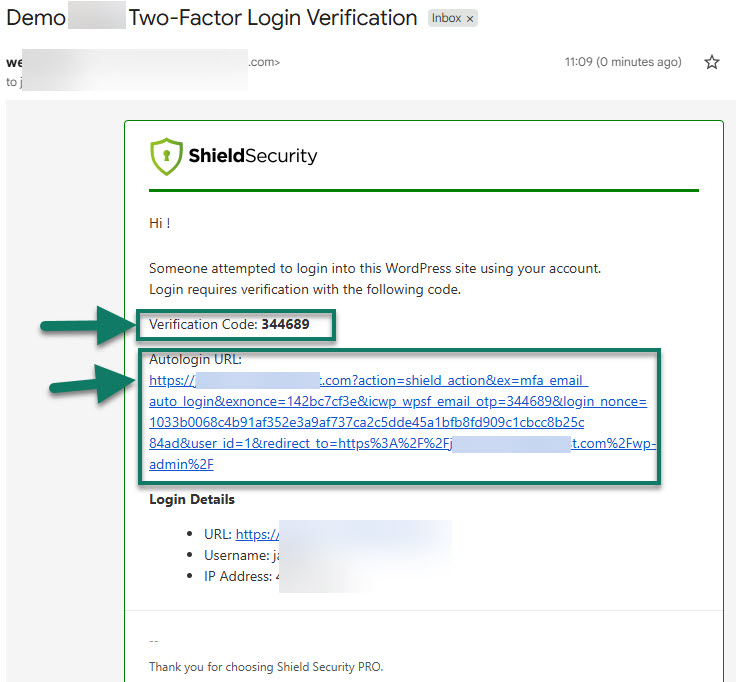
By clicking on the autologin link, you will be logged into your site instantly without having to go through the usual process of providing a 2FA login code.
It's important to note that these links are designed for one-time use, which means they can only be used once.
This feature will log you in on any browser. This means that you don't have to use the same browser in which you originally trying to login. You can click the link in a different browser, and it will still auto-log you into your site. This can be especially helpful in cases where you need to access your account quickly from various devices or browsers.
It's also worth of mentioning that, if you suspect that your mailbox or your users' mailboxes have been compromised for any reason, it's recommended to disable this feature temporarily to maintain the security of your accounts and data. Always prioritize the safety and privacy of your online accounts, and use this feature wisely to strike a balance between convenience and security.
Note: ShieldPRO is required for this feature. To find out what the extra ShieldPRO features are and how to purchase, please follow this link here.
For more information about this feature, read the blog article here.